
- Details
- Written by: ofurpaur
- Category: Announcements
- Hits: 3012
The working programme of the 12th Eurasian Economic Forum in Verona has been posted on the event’s official website. The Forum will be held 24–25 October. The main theme of the Forum is ‘Economy of trust and diplomacy of business from the Atlantic to the Pacific’.
The first day of the Forum, 24 October, will feature sessions devoted to global challenges in the energy sector, European energy security issues, the role of business in global geopolitics, and the creation of a cooperation-based economy from the Atlantic to the Pacific. On the final day of the Forum, discussions will focus on the financial sector in the context of new geopolitical challenges, the development of transport and infrastructure as prerequisites for the modernization of the digital economy and the development of territories as well as Industry 4.0 and the formation of the economy of the future in Greater Eurasia.
- Details
- Written by: ofurpaur
- Category: Announcements
- Hits: 2416
10-12 October 2019, Iceland
Arctic Circle Assembly 2019 and collateral events are coming up! We have gathered for you all breakout session organised by IACN and our partners!
Wednesday, 9 October 2019
Arctic Circle Pre-Event: From National Strategies to Shared Solutions, Hof - Akureyri
More info & Registration here
09:00 – 17:15 SENIOR ARCTIC OFFICIALS – ARCTIC ECONOMIC COUNCIL MEETING
Location: Harpa. Closed meeting – by invitation only
Organized by the Ministry for Foreign Affairs of Iceland
Thursday, 10 October 2019
09:00 – 10:00 GREENLAND'S EMERGING FOREIGN POLICY QUESTIONS
Location: Esja, Harpa Fifth Level
Organized by Centre for Arctic Studies, University of Iceland; Political Science, UiT the Arctic University of Norway
10:15 – 11:45 HOW TO CREATE STRENGTH-BASED YOUTH MOMENTUM IN THE ARCTIC? TRAUMA-INFORMED PROJECTS AND PRACTICES
Location: Esja, Harpa Fifth Level
Organized by University of Akureyri, Iceland with support from the U.S. Embassy in Iceland
10:15 – 11:45 NORDIC COUNCIL OF MINISTERS ARCTIC COOPERATION PROGRAM: ENHANCING SCIENTIFIC KNOWLEDGE IN THE ARCTIC
Location: Ríma B, Harpa Ground Level
Organized by Nordic Council of Ministers, Nordregio, Ministry for Foreign Affairs of Iceland
17:15 – 18:15 LANGUAGE, MOBILITY, AND CHANGE – NORTHERN RESEARCH FORUM EARLY CAREER SESSION
Location: Flói, Harpa Ground Level
Organized by The Northern Research Forum (NRF) at the University of Akureyri & Rannís (Icelandic Centre for Research), with Support from the US Embassy in Iceland
20:30 – 21:30 THE STEFANSSON MEMORIAL LECTURE
Location: Kaldalón, Harpa Ground Level
Organized by Stefansson Arctic Institute; Institute of Arctic Studies at Dartmouth College, supported by the Evelyn Nef Stefansson Endowment
Friday, 11 October 2019
08:00 – 09:00 ARCTIC MIGRATORY BIRDS INITIATIVE (AMBI): A MODEL FOR ARCTIC AND NON-ARCTIC STATE COOPERATION
Location: Skarðsheiði, Harpa Third Level
Organized by Conservation of Arctic Flora and Fauna (CAFF) Working Group of the Arctic Council and the National Institute of Ecology (NIE), Republic of Korea
08:00 – 09:00 INSPIRING ARCTIC VOICES THROUGH YOUTH
Location: Viðey, Harpa Second Level
Organized by Conservation of Arctic Flora and Fauna (CAFF) Working Group of the Arctic Council
11:15 – 12:00 ARCTIC CITIES AND SUSTAINABLE TOURISM
Location: Háaloft, Harpa Eighth Level
Organized by Arctic Mayors, Municipality of Akureyri, Municipality of Torshavn and Sermersooq Municipality
11:15 – 12:00 CAN WE SAVE THE WORLD WITH PROJECT MANAGEMENT
Location: Hafnarkot, Harpa Ground Level
Organized by the Masters in Project Management (MPM) program, Reykjavik University
17:00 – 18:30 ENHANCED ARCTIC SECURITY COOPERATION
Location: Esja, Harpa Fifth Level
Organizedby George C. Marshall European Center for Security Studies, Germany and Centre for Arctic Studies, University of Iceland
17:00 – 18:30 FAITH AND COMMUNITY ENGAGEMENT FOR SDGS IN THE ARCTIC
Location: Culture House (Þjóðmenningarhúsið)
Organized by by Evangelic Lutheran Church of Iceland; Institute on Religion and Reconciliation (IRR); Institute of Theology, University of Iceland; Faith and Community (F&C)
17:00 – 18:30 ARCTIC INNOVATION LAB: 15 IDEAS FOR A BETTER ARCTIC
Location: Norðurljós, Harpa Second Level
Organized by Arctic Innovation Lab in partnership with Harvard Kennedy School, the Fletcher School of Law and Diplomacy at Tufts University, University of Alaska Fairbanks, University of Greenland, University of Iceland and Reykjavík University
17:00 – 18:30 ARCTIC WETLANDS: HOW CAN THEY CONTRIBUTE TO CLIMATE CHANGE MITIGATION AND HEALTHY ECOSYSTEMS?
Location: Hafnarkot, Harpa Ground Level
Organized by Stockholm Environment Institute (SEI), Conservation of Arctic Flora and Fauna (CAFF) working group of the Arctic Council, Swedish Environmental Protection Agency (SEPA), Icelandic Institute of Natural History (NI) and the Agricultural University of Iceland (AUI)
17:00 – 18:30 POLAR LAW: THE LAW OF INDIGENOUS PEOPLE
Location: Stemma, Harpa Ground Level
Organized by the University of Akureyri
17:00 – 18:30 ARCTIC GLACIERS AND ICE CAPS: RECENT MASS LOSS AND CONTRIBUTIONS TO GLOBAL SEA-LEVEL RISE Organized
Location: : Kaldalón, Harpa Ground Level
Organized by the Icelandic Meteorological Office, the Icelandic Arctic Cooperation Network and the International Arctic Science Committee (IASC)
18:30 – 19:30 ARCTIC (IN)SECURITIES: OLD AND NEW
Location: Háaloft, Harpa Eighth Level
Organizedby Centre for Arctic Studies, University of Iceland
18:30 – 19:30 SCIENCE-BASED POLICY-MAKING: RAISING AWARENESS AND BUILDING CAPACITY
Location: Háaloft, Harpa Eighth Level
Organizedby Arctic Office at Alfred Wegener Institute, Helmholtz Centre for Polar and Marine Research, Association of Polar Early Career Scientists (APECS), The Icelandic Centre for Research (RANNÍS)
18:30 – 19:30 CHANGING FRESHWATER RESOURCES: SOCIAL, ETHICAL AND ENVIRONMENTAL IMPLICATIONS
Location: Kaldalón, Harpa Ground Level
Organized by Icelandic Arctic Cooperation Network; Icelandic Meteorological Office; Marine & Freshwater Institute; University of Akureyri; and Rif Research Station, International Arctic Science Committee (IASC)
18:30 – 19:30 CROSSROADS: ACTION NOW – ENGAGING THIS GENERATION TO SAVE THE NEXT – ARCTIC EDUCATION
Location: Akrafjall, Harpa Fourth Level
Organizedby UiT – The Arctic University of Norway; Maine North Atlantic Institute, University of Southern Maine; Reykjavík University; University of Akureyri; University of Iceland
20:30 – 21:30 UARCTIC CONGRESS 2020: COMING TO ICELAND
Location: Björtuloft, Harpa Fifth Level
Organizedby UArctic, University of Akureyri, Bifröst University, University Centre of the Westfjords, University of Iceland, Reykjavík University, Iceland University of the Arts, Hólar University College, and the Agricultural University of Iceland
Saturday, 12 October 2019
08:00 – 09:00 MARINE SUSTAINABILITY CHALLENGES IN THE ARCTIC
Location: Ríma B, Harpa Ground Level
Organized by University of Iceland
11:30 – 12:30 LEADERSHIP, ARCTIC GENDER EQUALITY AND DIVERSITY
Location: Kaldalón, Harpa Ground Level
Organized by the Ministry for Foreign Affairs of Iceland, the Nordic Council of Ministers, the Icelandic Arctic Cooperation Network; Icelandic Directorate of Equality, Centre for Arctic Policy and Security, University of Akureyri
16:30 – 17:30 THE WEST NORDIC REGION AND ARCTIC GOVERNANCE: CELEBRATING THE WEST NORDIC STUDIES PROGRAMME
Location: Kaldalón, Harpa Ground Level
Organized by University of Akureyri
17:30 – 19:00 SAFETY AT SEA IN THE ARCTIC
Location: Esja, Harpa Fifth Level
Organized by the Ministry for Foreign Affairs of Iceland and the Icelandic Arctic Cooperation Network
- Details
- Written by: ofurpaur
- Category: Announcements
- Hits: 2406
Developing a Roadmap for Arctic Observing and Data Systems (ROADS)
The SAON Strategy and Implementation Plan was approved in 2018. As a follow-up to this, SAON is in the process of developing a Roadmap to an Arctic Observing System (RAOS).
SAON has identified the development of this roadmap as essential to generating strong national investments in coordinated international Arctic observing, through confidently and coherently presenting the imperative observing foci, a strategy for observing them that leverages existing efforts and interests, supported by a value assessment of observing outputs towards societal benefit. The SAON Roadmap for Arctic Observing and Data System definition should build upon national efforts and needs, existing Arctic road mapping activities, and ultimately serve as a guide for developing concrete national plans to support pan-Arctic observing needs.
The Guidelines for contributing to SAON’s Roadmap for Arctic Observing and Data Systems will have this contents:
- A high-level, structural definition for the SAON Roadmap for an Arctic Observing System that will serve to generate strong international investments in Arctic observing
- Define how Arctic Societal Benefit Areas or other objectives should be used to shape the Roadmap for an Arctic Observing System.
The document will be made available here and presented 12th October at Arctic Circle Assembly.
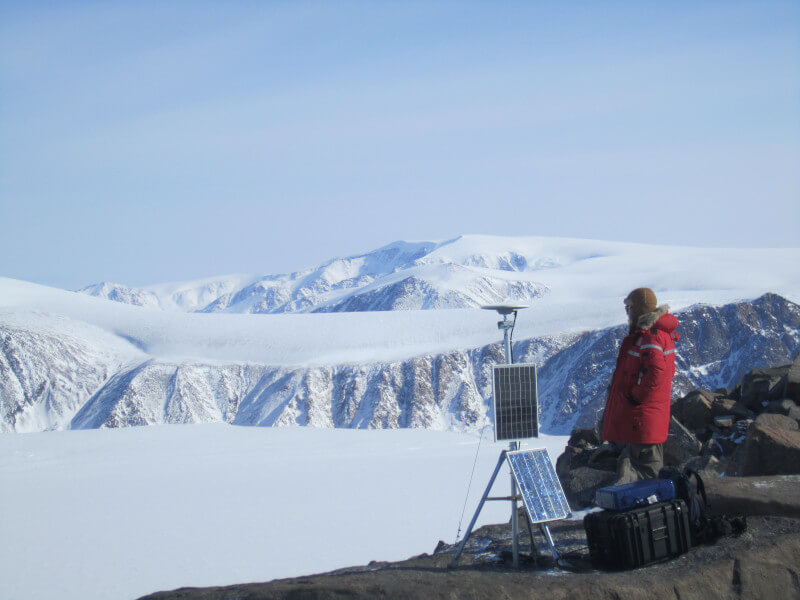
International Arctic Observations Assessment Framework - Value Tree for Physical Atmosphere and Ocean Observations in the Arctic
With the IDA Science and Technology Policy Institute (STPI), SAON published in 2017 the International Arctic Observations Assessment Framework, defining 12 Social Benefit Areas (SBAs) that rely on Arctic observations.
In spring 2019, the Finnish Meteorological Institute (FMI) led a project to use this framework in a so-called value tree analysis for Arctic meteorological and oceanographic networks. The report is available here and results can be viewed on the http://arctic-obs.fmi.fi/ site.
The report concludes that efforts in these disciplines for networks between 30°N and 60°N are five times greater than for networks north of 60°N.
The Third Polar Data Forum
The Third Polar Data Forum (PDF III) will be hosted by the Finnish Meteorological Institute in Helsinki, Finland from November 18th to 22nd, 2019. PDF III will be co-organized with regional partners including the INTAROS project in conjunction with the EU Arctic Cluster, the Royal Netherlands Institute for Sea Research, and other European organizations. The Forum will be co-convened by the IASC-SAON Arctic Data Committee, Southern Ocean Observing System, Standing Committee on Antarctic Data Management, the World Data System and other organizations engaged in polar data management.
More information, including the call for abstracts is available at https://polar-data-forum.org/
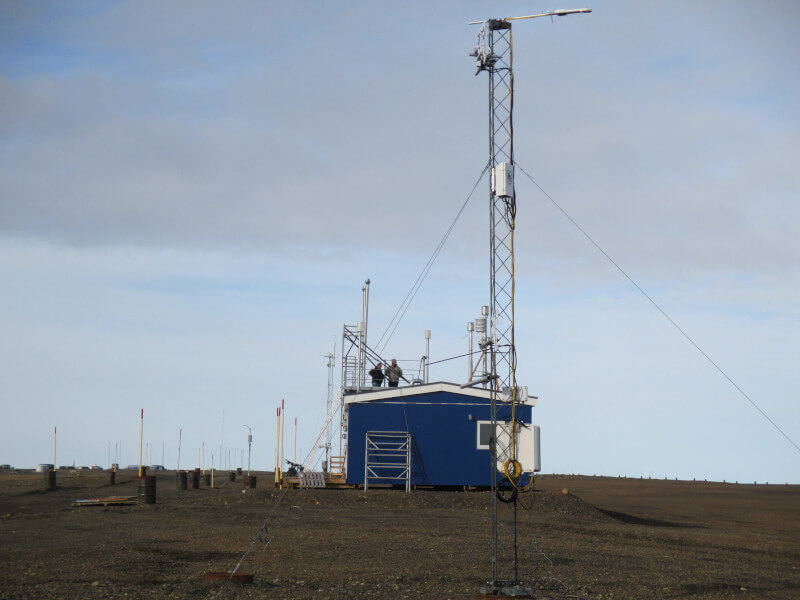
5th Arctic Observing Summit (AOS)
The AOS is a high-level, biennial summit that aims to provide community-driven, science-based guidance for the design, implementation, coordination and sustained long-term (decades) operation of an international network of Arctic observing systems.
The 5th Arctic Observing Summit will be held in Akureyri, Iceland on 31st March – 2nd April 2020, during the Arctic Science Summit Week (ASSW). The theme for the AOS will be 'Observing for Action' . The deadline for submitting White Papers or Short Statement is 15th November 2019.
The AOS is SAON's outreach event and is a joint effort of the International Arctic Science Committee (IASC), the International Study on Arctic Change (ISAC) and SAON.
6th International Symposium on Arctic Research (ISAR-6)
The International Symposium on Arctic Research (ISAR) meets for the sixth time to identify changes in the Arctic environment and society, and to discuss possible future sustainable development. Researchers with an interests in the Arctic are invited to participate in this multidisciplinary symposium and share their insights, their challenges, and to explore the possible futures of the Arctic. In addition to scientific papers, ISAR encourages reports on the human aspects of the Arctic including, the disciplines of the humanities, political science, economics, and engineering.
The session Development and Implementation of a Sustainable Arctic Observing Network: Accomplishments and Challenges (Main convener: Jeremy Wilkinson, Stein Sandven ; Co-conveners: Michael Karcher, Craig Lee, Hanne Sagen) will provide an opportunity to better understand the broad nature of an observing network (land, ocean, ice, and atmosphere), and welcomes presentations on all aspects of an Arctic observing system of systems. From the challenges associated with year-round data collection, through to the integration and visualization of multidisciplinary data from distributed repositories, societal benefit and cost benefit analysis, network design, policy and more.
The session focuses on co-producing recommendations regarding how to best develop, organise and maintain long-term observing systems in different Arctic regions (both land and marine based). These recommendations will address major SAON objectives, as well as forming an integral be part of the Roadmap for a future sustainable Arctic observing system, to be developed under the INTAROS project (www.intaros.eu).
The session Scientific Contributions to the Third Arctic Science Ministerial (ASM3) (Main convener: Volker Rachold; Co-conveners: Hiroyuki Enomoto, Thorsteinn Gunnarsson, Nicole Biebow, Jeremy Wilkinson) will focus on the scientific content of ASM3. It will serve as a forum to present and discuss scientific contributions to ASM3 and also include status reports on the planning of the ministerial. The purpose is to support the planning of the ASM3 and to enable the scientific community to contribute.
Abstract submissions are invited for four breakout sessions addressing the themes:
- Strengthening, Integrating and Sustaining Arctic Observations, Facilitating Access to Arctic Data, and Sharing Arctic Research Infrastructure
- Understanding Regional and Global Dynamics of Arctic Change
- Assessing Vulnerability and Building Resilience of Arctic Environments and Societies
- Capacity Building in the Arctic. Contribution of Science and Engineering, Private Sector and the Local Communities
Meeting of the SAON Board in Arkhangelsk, Russia
In the statement from the 2nd Arctic Science Ministerial in 2018, ministers confirm their intent to promote the sharing of research infrastructure and observing systems and their intent to “expand the cooperation in this area by progressively moving from the design to the deployment phase of an integrated Arctic observing system which also supports and includes community-based observatories, in cooperation with the Sustaining Arctic Observing Networks (SAON)…”
The SAON Board met 26th May 2019 during the Arctic Science Summit Week in Arkhangelsk, Russia and discussed among other things follow up actions to the statement from the 2nd Arctic Science Ministerial. One project was formulated as a proposal to the US National Science Foundation by a group of US researchers: Research Networking Activities in Support of Sustained Coordinated Observations of Arctic Change.
Documents from the meeting are available here.
European Commission Horizon 2020. Work Programme 2018-2020.
The Work Programme is available here. Two of the calls in the document make reference to SAON:
- LC-CLA-21-2020: Coordination of European Polar research (p. 46-47)
- LC-CLA-20-2020: Supporting the implementation of GEOSS in the Arctic in collaboration with Copernicus (page 53-54)
The call text for the second project says that it should support the mission and objectives of the international initiative on Arctic observations brought forward by the Sustaining Arctic Observing Networks (SAON). SAON plans to engage in the project and notes from a planning meeting 17th July 2019 are found here.
- Details
- Written by: ofurpaur
- Category: Announcements
- Hits: 2083
A 3-year post-doc position is available in remote-sensing of sea-ice thickness at the Alfred Wegener Institute in Bremerhaven, Germany. Please see further information below in the email. Deadline for applications is 3 November 2019.
For any further questions, please contact Robert Ricker at
- Details
- Written by: ofurpaur
- Category: Announcements
- Hits: 2445
In the 11th PolarPredictNews newsletter issue, our top item introduces the final phase of the Polar Prediction Project: The Consolidation Phase comes with a revised YOPP Implementation Plan and three webinars on 24 and 25 June where everyone is invited to join and discuss with the chair of the PPP Steering Group Thomas Jung (Alfred Wegener Institute), and the PPP Steering Group members Irina Sandu (ECMWF) and Greg Smith (ECCC) about YOPP research findings, community efforts and those activities that lie ahead.
In addition
Find out in the new issue what is behind the YOPPSiteMIP recipes for model and observation efforts.
Learn about a tiny island in the Southern Ocean that contributed extra radiosoundings to the recent YOPP Special Observing Period in the Southern Hemisphere.
In an interview with the Executive Secretary of the Arctic Council’s Working Group PAME, Soffia Gu∂mundsdóttir provides insights on what is the Arctic Shipping Data Base.
Also, don’t miss François Massonnet summarizing findings of the YOPP-endorsed SIPN South project.