
- Details
- Written by: ofurpaur
- Category: Energy
- Hits: 14624
Welcome to the Arctic Portal´s Energy Portlet for Energy in the Arctic, your go-to source for the latest updates on energy exploration, production, and consumption in the Arctic region.
The Arctic is home to a vast array of natural resources, including fossil fuels and renewable energy sources like wind and solar power. However, energy extraction and production in this region pose unique challenges due to its harsh weather conditions and delicate ecosystems.
This portlet provides you with current news, trends, and analyses on the state of energy in the Arctic, as well as insights into the promising and innovative solutions that will reshape the energy landscape in this critical region for years to come. Read on to discover more about the pivotal role that energy plays in the Arctic's future sustainability and economic growth.
- Details
- Written by: ofurpaur
- Category: Energy
- Hits: 2683
What are the main challenges ahead - when thinking about the Arctic and energy? In many places the Arctic is perceived as a vast storehouse that houses minerals and hydrocarbons in abundance.
From the perspective of non-Arctic states, especially the EU, China, India and many others, there is a strong interest in securing supply for the ever growing energy demand, mainly after oil and gas from the Arctic. Especially China and India will play a leading role in the energy import in the future.
The U.S. Energy Information Administration predicts in its latest assessment "The International Energy Outlook 2011" that world energy consumption will double during the next 30 years, from 505 quadrillion.
World oil consumption is predicted to increase from 85.7 million barrels per day in 2008 to 112.2 million barrels per day (225 quadrillion Btu) in 2035 or about 23 %. Gas consumption is predicted to increase 50 % from 2008 to 2035.
Despite the major increases of oil and gas consumption in the next 30 years, electricity is predicted to increase its share of the world's total energy demand the most in all end-use sectors except transportation.
The EIA predicts that the world demand for electricity will increase by 2.3 percent per year from 2008 to 2035 outpacing the growth in total energy use.
With the growing demand and possibility of increasing accessibility, however, legal questions and disputes can arise. Who owns the resources in the Arctic Ocean? And what role will energy diplomacy play in the 21st century and the Arctic?
Yet the opposite is also true: Despite a growing interest in Arctic resources from an industrial side, the demand could remain rather fragile than robust. It is certainly not yet a fact that activity in offshore areas will commence to a larger degree in the near future.
There are many uncertainties such as the oil price, political framework conditions, technological developments, global demand and developments in other energy regions affecting the future development.
Apart from the resource aspect of energy, the Arctic countries themselves face a number of challenges:
- How are they to build sustaining energy structures?
- Will there be a growing share of renewable energy sources, contributing to a diversification of economies?
- Will there be major investments in infrastructure and innovations such as smart-grids outside of Scandinavia and North-America?
Currently measures to increase energy efficiency are often intensively debated. The extended use of renewable or alternative energy sources is ironically depending on very similar factors such as the oil and gas development: fossil fuel prices, political framework conditions, technological developments, global demand and developments in other energy regions play a role here.
This leads to the fact that nuclear power is still an option that many countries favor for the future. Currently, Russia and Finland are planning to construct new reactors and the very ambitious CO2 emission reduction plans, especially in Europe, are likely to keep nuclear based production on the map for some time to come.
How all these developments impact on environment or social structures of indigenous / local people of the Arctic remains yet to be seen.
Source: Megatrends Bing Energy and Capital ENSEC EIAs IEO2011
- Details
- Written by: ofurpaur
- Category: Energy
- Hits: 2395
The Inuit Circumpolar Conference (ICC) provides a major international collective voice for more than 155.000 Inuit from Alaska, Canada, Greenland and the Chukotka Peninsula.
On behalf of people in Alaska the ICC in 2005 filed a legal petition against the government of the United States of America, saying its climate change policies violate human rights.
The ICC claimed the USA failed to control emissions of greenhouse gases, which in turn damaged the livelihood in the Arctic. The ICC demanded that the US limited its emission. The lawsuit was against the USA because it is the largest emitter of greenhouse gasses in the world, and it has refused to sign and ratify the Kyoto protocol.
When filing the petition Ms. Sheila Watt-Cloutier, then the elected Chair of the ICC said this:
"We submit this petition not in a spirit of confrontation—that is not the Inuit way—but as a means of inviting and promoting dialogue with the United States of America within the context of the climate change convention. Our purpose is to educate not criticize, and to inform not condemn. I invite the United States of America to respond positively to our petition. As well, I invite governments and non-governmental organizations worldwide to support our petition and to never forget that, ultimately, climate change is a matter of human rights."
As she said, the purpose is to educate, and that is exactly what the lawsuit did. The ICC lost the case, but it gained huge reaction from the public about climate change and what it was doing to the lifestyles of indigenous peoples.
Source: ICC
- Details
- Written by: ofurpaur
- Category: Energy
- Hits: 3308
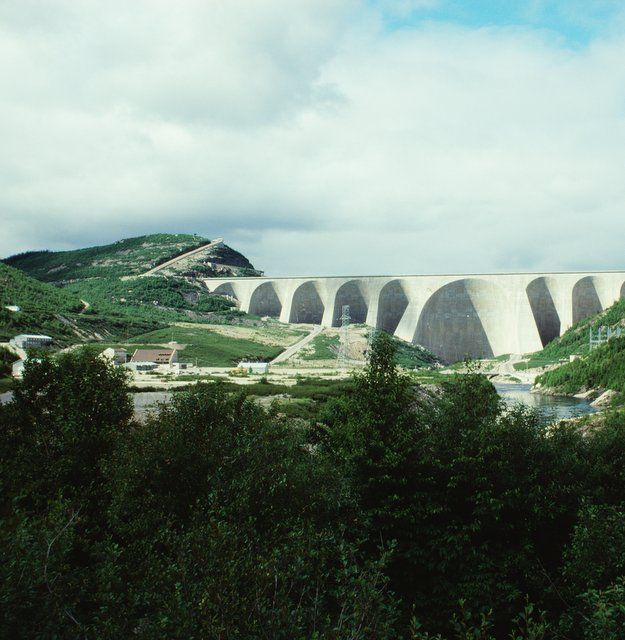
The Cree just make it into the Arctic; they live on the border of the Arctic definition provided in the Arctic Human Development Report. They live in James Bay, which is a region of northern Quebec, in the northeastern part of Canada. The area is a vast wilderness and can only be reached by a single road. The remoteness is immense.
The James Bay Cree count around 12.000 people who live in nine communities from 550 in population to around 3300, the Chisasibi. The fewest live in Nemaska, 560 in total.
They speak their own dialect but have learned English in schools. Their dialect is only one of few indigenous people's languages in Canada which is not in endangerment due to few speakers. The majority of the Cree are today Christian and they emphasize egalitarianism.
The Cree have lived off their land for 9000 years for food and resources. Among other, they hunt geese, ducks, moose's, beavers, otters, lynxes, fish, muskrats and waterfowls. They respect the competence and needs of the individuals and in their world humans and their societies are an inseparable part of the universe. It is made up of social beings, animals being willful beings, phenomena and objects all at the same time.
Much like in the Arctic region as a whole, the population has been growing. This has resulted in a change for the Cree, especially regarding food. They have adjusted to this scarcity by importing more food so they would not harm the environment and endanger stocks of species they hunt.
For the Cree the main problems are forestry clear-cutting, pollution of the land, the movement to declare the province of Canada a country separate to Canada and the issue that made the Cree famous amongst indigenous peoples around the world, and a true example for them, the large scale hydro projects.
The prospect of an enormous hydropower project in their backyard must have come as a shock to the Cree people, learning from it in newspapers in 1971. "I feel like I have been punched," one of them said about the decision.
They started a campaign against the project but it was too little and too late. A court case in the years 1972-1973 stopped work on the hydro project for a short time but in the end the project started again and was completed.
In 1975 the Cree signed a treaty and settled, signing the James Bay and Northern Quebec Agreement, giving the Cree ownership rights to areas around their communities, exclusive hunting and fishing rights over a large territory, regional self-government powers, cash compensation and other privileges, in exchange for allowing Hydro-Quebec, the power company, to proceed with development. In addition, the Cree benefitted from the project also in other ways Hydro-Quebec investing heavily in infrastructure in the area.
The Cree were pioneers in seeking their rights for the land they have lived on for thousands of year as indigenous people. They became leaders in the struggle to gain international rights and an example for other indigenous groups. As well as gaining sympathy from the rest of the Canada and people all over the world, the Cree raised awareness of environmental protection and the roles of humans in the environment.
The Cree managed to raise discussions among the public on large development projects and gained much attention worldwide.
Source: Arctic Human Development Report
- Details
- Written by: ofurpaur
- Category: Energy
- Hits: 2130
One of the most prominent challenges for indigenous peoples ever since the onset of colonial restructuring of their societies and economies is the issue of marginalization on their own land.
Questions of ownership, but also the right to utilize land in a certain way and ultimately the self-determination of indigenous peoples have gained growing importance in social, economic and political discourses, especially with the rise of indigenous peoples movements after the second world war around the Arctic.
In this context falls the concept and establishment of obshchinas, that are a specific phenomenon of Russia and inextricably linked to historic and contemporary socio-economic processes there.
The origin of the concept can be summarized as follows: Historically, Russian ethnographers used the term obshchina to denote the basic unit of indigenous political economic community, based on family-clan relations. The concept evolved through the nineteenth century to include the notion of territoriality: an obshchina was then known as an indigenous family-clan, a political community that exercised control over its traditional lands and resources.
It is a kinship / clan based concept to describe the local economic influence of indigenous people over their land. Even though the indigenous societies became restructured – often by force – the term obshchina endured. The term and concept somewhat experienced a "renaissance" when after the collapse of the Soviet Union the federal government created legislation to enable indigenous peoples to assert claims to traditional lands and resources in 1992. Despite some delays due to the turmoil following the collapse of the Soviet Union, places such as the Sakha Republic within the Russian Federation was allowing the creation of obshchinas already the same year.
However, the process of redistribution has been quite difficult. District level governments (governments below the republic or provincial levels) are required to grant sufficient land to support traditional activities such as reindeer herding, hunting, and fishing. Land is granted only for traditional activity purposes; industrial resource development and other "modern" activities are beyond the mandate of obshchinas.
This can be seen as somewhat ambiguous, as it could be interpreted as a prolongation of paternalistic approaches of states towards their indigenous peoples or even discriminatory, as it seems that indigenous people are not allowed to "modernize" their livelihoods.
In terms of the type of legal rights accorded to obshchinas, it is notable that they are much weaker than the comprehensive land claim agreements in North America. Obshchinas do not provide proprietary rights, but do create exclusive rights of usage to obschina members. They can in theory stop modern resource development on traditional lands. However, this right in principal is limited, as resource development can prevail with appropriate compensation to the members of an obshchina.
With the development of Russian society after the soviet collapse, the courts have increasingly shown efforts to enforce established Indigenous people's rights, making the federal system more considering towards the special features of indigenous peoples cultures.
Sources: Arctic Human Development Report: Land Claims, Ownership, and Co-management Answers.com Indigenous Rights and Self-determination: Models and Options