
- Details
- Written by: ofurpaur
- Category: YAR & Features
- Hits: 10487
Permafrost covers a large area of the Arctic and a total of 25% of the earth surface. But what is it and why is it in the focal point of contemporary climate change research.
What is Permafrost?
Permafrost is defined as ground (soil or rock and included ice or organic material) that remains at or below 0°C for at least two consecutive years. Therefore, the ground is permanently frozen, hence the name Permafrost.
Most of the permafrost that exists today was formed during cold glacial periods. It has persisted through interglacial periods the last 10,000 years. Relatively shallow permafrost (30 to 70 meters) was formed during the last 6,000 years and some during the Little Ice Age (from 400 to 150 years ago). In continental interiors, permafrost temperatures at the boundaries between continuous and discontinuous permafrost areas are generally about -5°C, corresponding roughly with the -8°C mean annual air temperature.
Permafrost in mid- and low- latitude mountains is warm and its distribution is closely related to characteristics of the land surface, slope gradient and orientation, vegetation patterns, and snow cover.
Subsea permafrost occurs close to 0°C over large areas of the Arctic continental shelf, where it was formed during the last glacial period on the exposed shelf landscapes.
Permafrost is geographically continuous beneath the ice-free regions of the Antarctic continent and occurs beneath areas in which the ice sheet is frozen to its bed.
Why is it important?
Climate scientists have predicted that global warming will warm the earth of at least two degrees Celsius by the year 2100. Some say the figure could rise to 5 degrees. This will have significant effects on permafrost regions.
Climate change will lead to the earths warming, therefore melting large permafrost areas. The projections are that permafrost will though not disappear completely. A projected decline in the extent of permafrost will have a major impact on the Earth ecosystem, affecting global climate through the mobilization of carbon and nitrogen stored in permafrost.
The largest permafrost areas are in Siberia, where the thickest permafrost can also be found. In Central Siberia the soil can be frozen to a depth of over 1500 meters. Permafrost is also common in Alaska and Canada. Click the map on the right to expand it and see the main permafrost areas.
On the southern fringes of permafrost areas, where the permafrost is already relatively warm, it could disappear completely. Further north, much more soil could melt - perhaps up to 80 centimeters deep instead of 50 centimeters, as it is today.
In all these areas fauna and flora have to adjust. Where the soil was previously dry, it could become wet. Conversely, areas with many lakes can suddenly dry up, because of the thawing permafrost. The thawing can become so severe, that the permafrost becomes permeable and the lake water will seep into the underlying ground.
But humans could ultimately be effected as well, and in fact already have. In Siberia, railway lines have subsided and therefore are ruined. Many areas, in Siberia especially, could be affected since many things are built on permafrost. When the ground thaws, the foundation can fall, like the case with the railway lines. Same applies to some airport runways, roads and households, both in Siberia, Alaska and Canada.
Thawing permafrost can further make Oil pipelines unstable both in Russia, Alaska and Canada. The Trans-Alaskan pipeline system is in some places built on permafrost. If it would fall it could cause a major disaster. Houses have also fallen because of permafrost thaw, like the picture at the top shows.
Another aspect of the permafrost thaw is the methane buried under it. The effects of such greenhouse gas release are still unknown and further research on this is both needed and due. General consensus is that the permafrost thaw will lead to an increase in greenhouse gas emissions.
PAGE21
As noted, further research is necessary. Currently, numerous prestige institutions are working together within the "PAGE21 – Changing Permafrost in the Arctic and its Global Effects in the 21st Century" project to better understand the feedbacks of the Arctic permafrost carbon and nitrogen pools to global climate change.
PAGE21 will aim to understand and quantify the vulnerability of permafrost environments to a changing global climate, and to investigate the feedback mechanisms associated with increasing greenhouse gas emissions from permafrost zones.
This research will make use of a unique set of Arctic permafrost investigations performed at stations that span the full range of Arctic bioclimatic zones. The project will bring together the best European permafrost researchers and eminent scientists from Canada, Russia, the USA, and Japan.
The four year project, coordinated by Dr. Hans-Wolfgang Hubberten at the Alfred Wegener Institute in Germany, will contribute directly to the existing permafrost monitoring frameworks to further research into permafrost and climate change and works in close connection with members of the IPCC 5th Assessment Working Group.
Sources:International Permafrost Association I Alfred Wegener Institution I PAGE21 website
- Details
- Written by: ofurpaur
- Category: YAR & Features
- Hits: 6577
Alaska Center for Energy and Power (ACEP) is seeking renewable energy science specialists for their post doctoral positions in Fairbanks, Alaska. The position is in cooperation with the University of Alaska.
ACEP is an applied research program currently working under a private sector business model within the University of Alaska, in partnership with Alaska Energy Authority, National Renewable Energy Laboratory and others partner institutions. It was established in January 2008 as a gateway for renewable energy related activities.
Through the years, the Center has been developing various research projects. They include diesel efficiency, energy economics, energy storage, geothermal, biomass, methane capture, alternative fuels, in-river hydro, tidal energy, and wind power. Please, click here for the full list of available projects.
The Alaska Center for Energy and Power aims to meet international and domestic demands for applied energy research in order to increase a possibility of lowering the cost of energy for state's industries and private individuals what would equal an increase of economy development. ACEP focuses on world class energy resources as oil, gas and coal, which Alaska is wealthy of.
The Center strives to be agile, demands - driven and interdisciplinary within their field of expertise, in the middle of global opportunities associated with large, undeveloped areas in the northern hemisphere, rural villages and remote industrial sites. It also seeks to increase educational opportunities for both, young researchers and experienced professionals in order to ensure that the global research is conducted in relevant way on world class level.
ACEP, through the Institute of Northern Engineering (INE) at the University of Alaska Fairbanks (UAF), invites applications for a post-doctoral positions in data management, acquisition, and analysis related to hybrid power and energy systems to be filled immediately. Successful applicants will be expected to have a strong commitment to aid in the creative development of research programs to support development of next generation energy systems for rural Alaska and other islanded grid networks.
ACEP seeks qualified applied research faculty in our multi-disciplinary research organization who are interested in pursuing an exciting, fast paced position. Researchers will have experience in energy related fields and an interest in developing pragmatic solutions for fossil or renewable energy production in the unique Alaskan energy environment. Appointments will generally be made at the assistant research professor level, though higher ranks will be considered.
The Center is particularly interested in faculty that matches well with its growth areas, energy and natural resources, and climate and the environment. Research faculty positions in INE are grant funded, though ACEP will provide 3 months of salary support when warranted. Although an earned doctorate is not mandatory, it is highly recommended. Successful applicants will have a demonstrated success record in research, including publications and outreach.
ACEP is based at the University of Alaska Fairbanks, and the projects and research partners are located through out the state. The mission of ACEP is to meet state and local needs for applied energy research by working toward developing, refining, demonstrating, and ultimately helping commercialize marketable technologies. ACEP is a leader in Alaska-specific energy solutions and strives to exceed expectations by offering dynamic, timely projects responsive to public and private sector needs.
The Alaskan beauty which is considered to be one of the most amazing places on earth, offers the opportunities to interact with the wildlife, unique landscape and small communities.
For more information with regards to current projects and career opportunities, please visit the homepage of Alaska Center for Energy and Power, contact Gwen Holdmann at
- Details
- Written by: ofurpaur
- Category: YAR & Features
- Hits: 6067
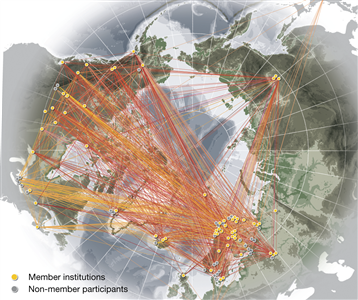 "In the North, for the North, by the North" - the motto of the University of the Arctic. It was founded in 2001 and is an international cooperative network consisting of universities, colleges and other organizations with an interest in promoting education and research in the Arctic.
The overall goal of the University of the Arctic is to create a strong, sustainable circumpolar region by empowering indigenous peoples and other northerners through education, mobility and shared knowledge.
One aspect of UArctic is it´s Thematic Networks. That increases cooperation between the member institutions on specific topics. Among the topics are Arctic Coastal and Marine Issues, Arctic Medicine, Energy in New Time, Global Change, Northern Agriculture, Northern Tourism and others.
Each network has a leader and these leaders meet regularly to discuss what they have done, what they want to do and to get ideas and thoughts from their colleagues.
The last meeting was in Akureyri, Iceland, late in January of 2012. Arctic Portal was there and captured videos of the meetings. Here are interviews with various people around the meeting.
Lars Kullerud, president of UArctic, talks about the school, the thematic network and the meeting in Akureyri:
http://www.youtube.com/watch?v=ouylRLLW_E0
Kirsi Latola, director of Thematic Networks:
http://www.youtube.com/watch?v=AjP33oblHYI
Professor Karen Tanino, Dept. Plant Sciences, College of Agriculture and Bioresources, University of Saskatchewan , talks about Northern Agriculture Thematic Network.
http://www.youtube.com/watch?v=fbY7-W91GOI
Peter Weiss, Director of the University Center of the Westfjords, talks about the Arctic Coastal and Marine Themtic Network.
http://www.youtube.com/watch?v=2ieCJU4Ro88
Tomi Knuutila, University of Lapland, Finland, talks about Thematic Network Digital Media and Media Arts.
http://www.youtube.com/watch?v=TtR0_yNm4pM
- Details
- Written by: ofurpaur
- Category: YAR & Features
- Hits: 9952
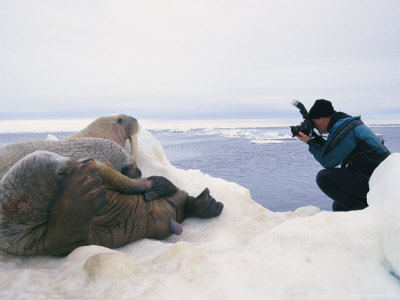 Paul Nicklen uses his camera to reveal the nature of a world melting away under human-induced global warming. He works for National Geographic magazine.
“I call myself an interpreter and a translator,” says Nicklen. “I translate what the scientists are telling me. If we lose ice, we stand to lose an entire ecosystem. I hope we can realize through my photography how interconnected these species are to ice. It just takes one image to get someone’s attention.”
On the website Ted.com he shared some of his amazing stories from the Arctic and Antarctic. He lived with the Inuit for several years as a child, falling in love with the Arctic, and subsequently the Antarctic.
His pictures are taken both underwater and above water.
One is particularly amazing, his encounter with a leopard seal where he faced sudden death, but in the end portrayed photos of the seal eating penguins. He formed a friendship with the leopard seal in the ice-cold water.
Here is Paul’s story and his photos.
- Details
- Written by: ofurpaur
- Category: YAR & Features
- Hits: 7003
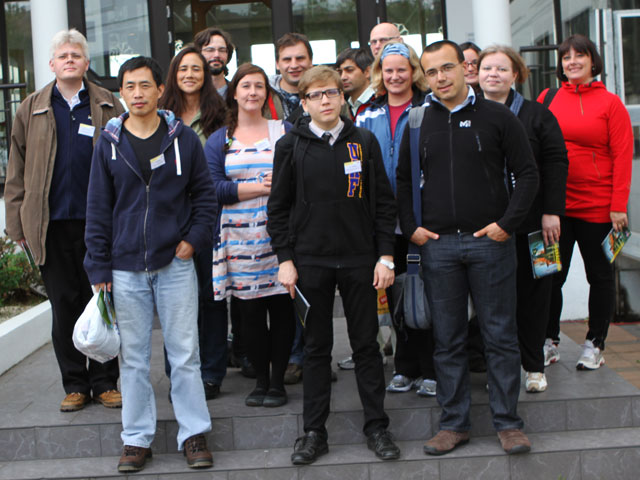 Are you interested in learning more about the Arctic, Antarctic or the cryosphere in general? Thinking of going to graduate school or gaining extra credibility through a certificate programme or another degree?
APECS has gathered information to help prospective students finding their way in Arctic studies.
On APECS.is you can find a searchable database which includes graduate programmes that have a focus or specialty in any field of Arctic, Antarctic, Alpine or other areas within the cryosphere – ranging from social sciences and law to ecology, geology, physics and more.
The purpose is to provide prospective students with information on those programmes, such as disciplinary focus areas, website links, typical program duration, application deadlines, costs and, where available, financial support.
APECS encourages universities and individuals to enter programme information to the database, as well as posting current openings for graduate research and teaching assistantships on the APECS jobs page.
APECS, the University of the Arctic, and the International Antarctic Institute are working collaboratively to compile this inventory of programmes worldwide.