
- Details
- Category: YAR & Features
- Hits: 18646
by Alexander Castleton, PhD Student in Sociology at Carleton University, Canada
Inuit Hunting Stories of the Day (IHSOTD from now on) is a virtual community formed in the social networking site Facebook. Its creator, Nick Illauq, pointed out in an interview for Nunavut's news outlet Nunatsiaq News that it "makes Inuit more proud to go hunting after seeing all those wonderful pictures and videos." (Dawson, 2013). As its name indicates, in this group people are invited to share content in relation to hunting. Fed with different content uploaded by users such as pictures, videos or comments, IHSOTD is a repository of Inuit hunting activities across the Arctic. Inuit people or anyone who is interested can join the group through commenting on pictures, asking questions, and engaging in conversations, or one can just lurk. As of now (October 23th, 2014), it has 5415 members. Caribous, Arctic chars, maaqtaq, seals, aakutuk, all-terrain vehicles, walruses, polar bears, geese, different Arctic birds, are what I am able to see as I go back and forth from the Facebook group in my laptop to the Microsoft Word document while I write these lines. People armed with their rifles and cameras or digital devices register the moments and share this content for anyone such as myself, sitting in my desk in Ottawa, to see. Since it is a public group, anyone can access the group, see its members, and its posts.
IHSOTD provides a platform of multimedia communication in which the Arctic is culturally shared by over 5000 people. The majority of members of this Facebook group are Inuit -- judging by their last name and place of residence. Christensen (2006, 2003) observed that Inuit can translate offline identities online, establishing a cultural boundary by displaying content such as language or images online that relates only to Inuit people. Thus, instead of being a place of de-localization and lack of roots in a global culture (see, for instance, Negroponte, 1995) the internet seems to be a place for the assertion of identity for anyone to see; and this seems to be the case in IHSOTD. It is a sample of how a little bit of cyberspace has been appropriated and filled with Inuit content, displaying images of animals, landscapes, traditional practices, and conversations about the land. The site shows that indigenous peoples, such as the Inuit, exist in the North as a physical place and also in the flowing space of the Internet network (see Castells, 2009, 2000).
This Facebook group plays the role of a virtual community by pulling together Inuit from across the Arctic, who share an identity related to the land and hunting. The access to such content provides a sense of identification with a continuing essence of Inuit-ness, attached to traditional practices that play an important role in the identification of Inuit culture and the making of cultural boundaries. It "makes Inuit more proud to go hunting after seeing all those wonderful pictures and videos" as Nick Illauq said to Nunatsiaq News (Dawson, 2013). He added: "This site brings everybody together and in the future, it will become even more important in fighting Greenpeace and governments". (ibid.). The point is for Inuit people to come together, sharing their stories: "Inuit are a minority and this makes them stronger by combining forces and being one voice". (ibid.). Inhabiting a place in cyberspace is a way of building Inuit roots within an increasingly globalized society. Furthermore, an attachment to place and a means to feel part of a larger history through the practice of traditional activities speak to what the core of being Inuit is today. Social media such as Facebook is an important part of the Inuit media-scape (Appadurai, 1997) in which this identity is negotiated.
In his study of the seal hunt controversy, George Wenzel (1991) stated that Westerners have defined the parameters in which to analyze Inuit culture. The anti-sealers argued that Inuit "are now just like us", because "the artifacts that made Inuit what they were are no longer part of the visible present" (Wenzel, 1991: 6). This kind of 'ethno-nostalgia' that the anti-sealers promote ignores the fact that "adaptation to new technologies and social features have also been a part of the Inuit cultural dynamic for at least one thousand years" (Wenzel, 1991: 27). The ignorance of this fact would establish Inuit peoples as frozen in time and as living museum-like pieces in order for them to be 'authentic'. Western perspectives like this fail to understand what culture is, and idealizes indigenous peoples as simple, primitive, and stuck in time. Culture means something porous, flexible, fluid, and susceptible to change. It means cultural adaptation to technical changes which has been the subsistence pattern of Inuit across time (Wenzel, 1991). Inuit did not become 'less Inuit' because they hunted with rifles rather than with spears, bows and arrows; or when snowmobiles became the principal means of transportation for them. It is the appropriation of technology which has to be understood in the broader social context, a context of change that goes all the way back to the first contacts.
A notion grasping this interaction between technology, identity, and cultural practices in its multiple dimensions is Aporta and Higgs' (2005) "ecology of technology". This concept starts from the premise that in order to understand the impact or the socio-cultural significance of the introduction of technology in its full complexity, it is necessary to have a look at the larger picture of the social relations in which the technology is introduced. To illustrate this concept, Aporta & Higgs (2005: 739) exemplify the snowmobile from its inception – a most perfect technology to solve the tension between the process of sedentarization fostered by the Canadian government with the establishment of settlements across the Arctic, and outpost seasonal camps in which Inuit hunt. The snowmobile allows for great speed of transportation across the tundra so life-in-town and hunting activities can be reconciled. At the same time, the appropriation of snowmobiles prompted Inuit to seek wage employment in order to be able to afford the expenses of going hunting using the snowmobiles. This way, "the snowmobile was a facilitator in the new cultural setting of the Inuit" (Aporta & Higgs, 2005: 740). The idea of an ecology of technology means that technologies do not have a deterministic relation to social organization and cultural patterns, rather it means that technical devices are introduced into pre-exiting social conditions which interplay with the technology, negotiating its adaptation and outcome.
With the introduction of ICTs such as the Internet and social media, the ecology is one of globalization. Social media appears to be a multimedia communication tool that is collectively appropriated as part of being Inuit in a globalized world. In fact, having a presence in cyberspace is essential in order to fight colonial perspectives which do not understand Inuit culture and its subsistence patterns. In this sense Wachowich (2006: 137) argues, "[s]ubsistence, it is surmised, must extend beyond concepts of the ecological and the material to incorporate the social exchanges, values, and actions that are part of modern hunting communities." Technology is furthermore immersed in this ecology, whereby the Internet is a primordial setting for claiming rights, influencing representations, and talking back to colonizing forces in the West. Here I want to recall the Declaration of Principles of the World Summit on the Information Society, Article 15, of 2003: "In the evolution of the Information Society, particular attention must be given to the special situation of indigenous peoples, as well as to the preservation of their language and their cultural legacy". The appropriation of such technical devices means that Inuit identity has to be understood amid global processes where Inuit-ness is deployed. It is an ecology in which global and local are shuffled within constant iteration. Social media appears to be a very useful tool for preserving and asserting Inuit identity in the 21st century.
References
Aporta, C. and Higgs, E. (2005). Satellite culture: global positioning systems, Inuit wayfinding, and the need for a new account of technology. Current Anthropology 46 (5); pp. 729–753.
Appadurai, A. (1997). Modernity at large: Cultural dimensions of globalization. Minneapolis: University of Minnesota Press.
Castells, M. (2009) Communication Power. Oxford University Press: Oxford.
Castells, M. (2000) Materials for an explanatory theory of the network society. British Journal of Sociology, vol. 51, num. 1, pp. 5-24.
Christensen N. B. (2006) A screen of snow and recognition reigned supreme? Journeys into the homeland of a Greenlandic webpage. In Native on the Net: Indigenous and Diasporic Peoples in the Virtual Age, edited by Kyra Landzelius, pp. 80-96 Routledge: New York.
Christensen, N. B. (2003) Inuit in Cyberspace, Copenhagen, University of Copenhagen, Museum, Tusculanum Press.
Dawson, S. (2013). Facebook page records tales of the Inuit harvest. "This makes Inuit more proud to go hunting". Nunatsiaq News, NEWS: Around the Arctic January 25, 2013 - 2:43 pm. Available at: http://www.nunatsiaqonline.ca/stories/article/65674facebook_page_records_tales_of_the_inuit_harvest/
Wachowich, N. (2006). Cultural survival and the trade in Iglulingmiut traditions, in Stern, P. and Stevenson (eds.), Critical Inuit Studies: An Anthropology of contemporary Arctic ethnography, University of Nebraska Press, Lincoln, pp. 119-138.
Wenzel, G. W. (1991). Animal Rights, Human Rights: Ecology, Economy and Ideology in the Canadian Arctic. Belhaven Press: London.
World Summit on the Information Society, Declaration of Principles: Building the Information Society: a global challenge in the new Millenium (2003). Document WSIS-03/GENEVA/DOC/4-E, Geneva 2003 – Tunis 2005.
- Details
- Written by: ofurpaur
- Category: YAR & Features
- Hits: 26074
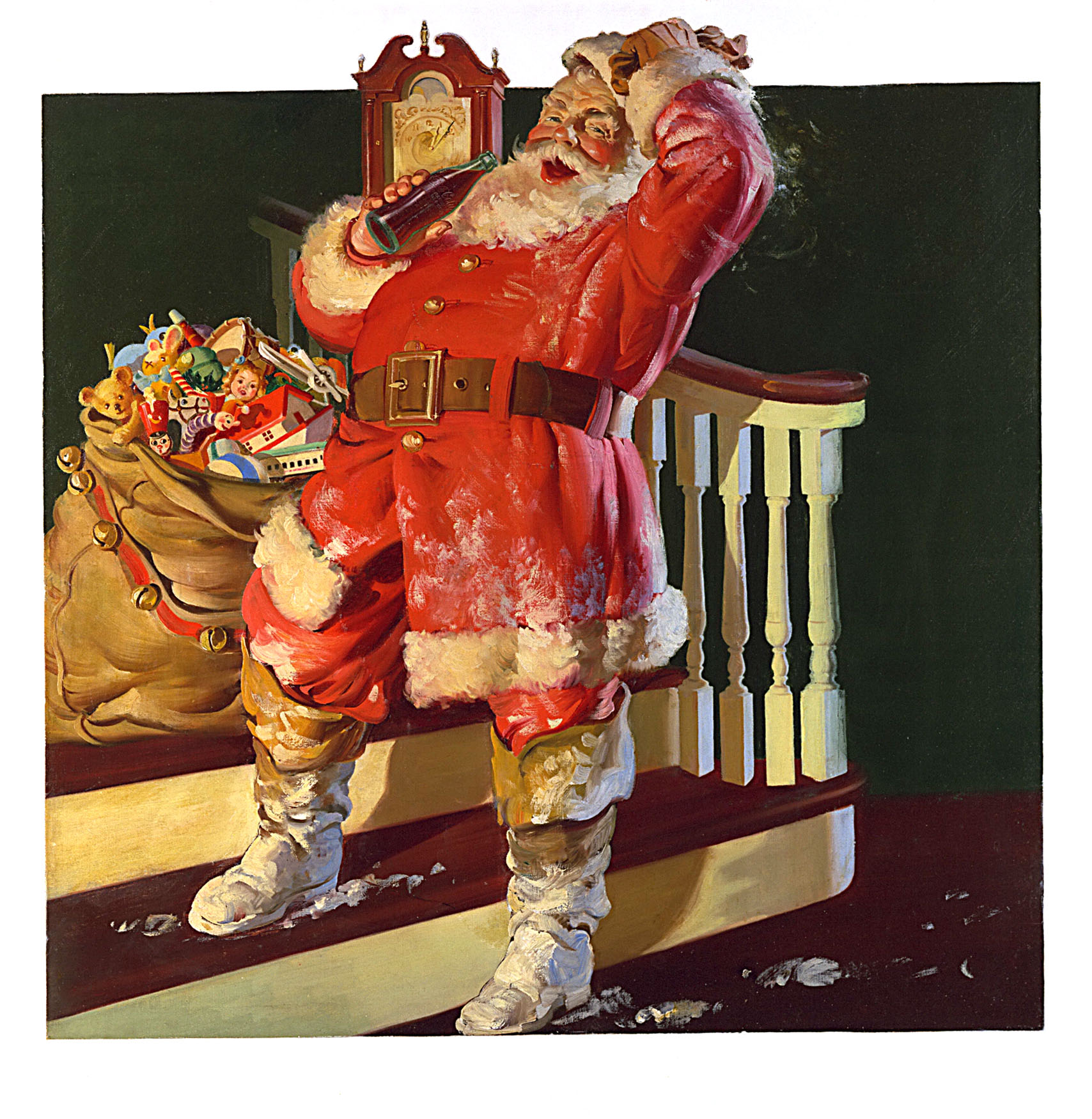 Now in the Arctic region, as elsewhere, the time of Christmas has started, except for in the Russian Arctic. In various regions in the Arctic, Christmas is a quite new idea which was introduced by western missionaries. The North has been a periphery for western civilization for numerous years and western Christmas traditions do not root so deep within Arctic communities.
Everywhere along the Arctic, Christianity was brought upon, pronounced or forced to the residents in the Arctic region. As a result, vast majority of all Arctic residents are affiliated with some form of Christianity. Various Protestant churches dominate in northern Fennoscandia, Iceland, the Faroe Islands, Greenland, Alaska, and parts of northern Canada, while the Russian Orthodox Church is prevalent in the Arctic regions of the Russian Federation and in addition has limited presence in Alaska and parts of Finland.
Finally, the Roman Catholic Church is particularly strong in parts of Canada and Alaska. There is considerable variation as to when Christianity reached different parts of the Arctic. While it happened almost 1,000 years ago in northernmost Europe, the inhabitants of the Chukchi Peninsula in the Russian Far East had little first-hand experience with Christianity before the 1990s. Generally speaking, the 18th and 19th centuries were the major periods of religious conversion in the Arctic. There have been various attempts to explain the rapid conversion of Arctic peoples to Christianity. Most authors agree that a combination of several factors is responsible. The adoption of Christianity rarely, if ever, resulted in the simple replacement of one religious system by another. Instead, old and new beliefs were reintegrated within a new system that was both Christian and local (Arctic Human Development Report).
Even though Christianity was brought to the Arctic region, old pagan beliefs persist among Arctic residents. All northern indigenous peoples believe that there is a close relationship between humans and nature. Humans and animals are said to be able to understand each other. Animals were said to have spirits which affect the fortune of humans.
Angry spirits caused illness and benign spirits helped the hunter by guiding animals into his path. Traditionally, the wishes of the spirits could be found out by a spirit medium called a shaman. In a special ritual performance, the shaman would go into a trance. It was thought that the shaman's soul had left his or her body and flown to the land of the spirits. Here, the shaman would try to get back the soul of a sick person which had been captured by the spirits, or to get the spirits to promise that the hungry community would catch an animal (The Arctic Is). These believes are called shamanism and animism.
However, Some of these beliefs have grown weaker during this century under the influence of Christian missionaries, teachers and government officials. For a long time, indigenous peoples themselves turned their backs of these beliefs in order to appear 'modern'. But many ideas about the relationship between humans and animals remain strong. Some Inuit in Greenland still whisper 'thank you' to a seal they have just killed (The Arctic Is).
Winter Solstice
The complexity of modern Christmas celebrations should be seen in a historical perspective. In the early Christian Church, Easter, not Christmas, was the most important religious feast. Christmas celebrations only gained importance in the 4th century AD. The Roman Church adopted the date of December 25, celebrated by the Romans as the winter solstice. The choice expresses the close connection between Christ and the sun in early Christian religion. Christ rapidly adopted striking features of the sun god Helios such as the halo. In the Roman Empire the celebration of Christmas replaced the feast of Sol Invictus, the rebirth of the sun at December 25.
The seasonal significance of the winter solstice is in the reversal of the gradually lengthening nights and shortening days. How cultures interpret this is varied, since it is sometimes said to astronomically mark either the beginning or middle of a hemisphere's winter. Winter is a subjective term, so there is no scientifically established beginning or middle of winter but the winter solstice itself is clearly calculated to within a second. Though the winter solstice lasts an instant, the term is also colloquially used to refer to the full 24-hour period of the day on which it occurs. Worldwide, interpretation of the event has varied from culture to culture, but most cultures have held recognition of rebirth, involving holidays, festivals, gatherings, rituals or other celebrations around that time (Wikipedia).
However, by a description of Franz Boas, the celebration of winter in an Inuit community in Qiqirtat (Kekerten Island, Canada), feast was not connected to the winter solstice, but prepared the hunting of the winter season. In the course of the ritual the success of the hunt is assessed in various divinatory games such as the tug-of-war of the ptarmigans and the ducks. Thus we may infer from the structure of the ritual that the relationship to the spirits of the dead is decisive in determining the success of the hunt. It is remarkable that the animals themselves never are partners in the ritual interactions between the Inuit with either the spirits of the dead or Sedna and her representatives, the qailertetang (Le Journal de la Société des Américanistes)
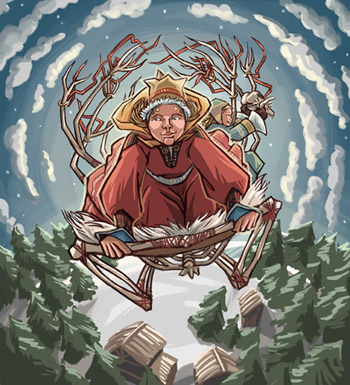 The Saami, indigenous people of Finland, Sweden and Norway, worship Beiwe, the sun-goddess of fertility and sanity. She travels through the sky in a structure made of reindeer bones with her daughter, Beiwe-Neia, to herald back the greenery on which the reindeer feed. On the winter solstice, her worshipers sacrifice white female animals, and with the meat, thread and sticks, bed into rings with ribbons. They also cover their doorposts with butter so Beiwe can eat it and begin her journey once again (Wikipedia).
In Scandinavia and Iceland the arrival of Juletid (Christmas) came to refer to the midwinter celebrations. By the late Viking Age, the Yule celebrations came to specify a great solstitial Midwinter festival that amalgamated the traditions of various midwinter celebrations across Europe, like Mitwinternacht, Modrasnach, Midvinterblot, and the Teutonic solstice celebration, Feast of the Dead. A documented example of this is in 960, when King Håkon of Norway signed into law that Jul was to be celebrated on the night leading into December 25, to align it with the Christian celebrations. For some Norse sects, Yule logs were lit to honor Thor, the god of thunder. Feasting would continue until the log burned out, three or as many as twelve days. The indigenous lore of the Icelandic Jól continued beyond the Middle Ages, but was condemned when the Reformation arrived.
The celebration continues today throughout Northern Europe and elsewhere in name and traditions, for Christians as representative of the nativity of Jesus on the night of December 24th, and for others as a cultural winter celebration on the 24th or for some, the date of the solstice (Wikipedia).
Modern Christmas Celebration
Even though the traditional Christian belief of Christmas is predominant, many local customs and traditions live along the culture among the Arctic and they root to their old pagan roots. In Scandinavia the equaliant for Santa Claus is the Tomte or Nisse. It is a mythical creature of Scandinavian folklore originating from Norse paganism. Tomte or Nisse were believed to take care of a farmer's home and children and protect them from misfortune, in particular at night, when the housefolk were asleep. Tomte is a common Swedish name, derived from his place of residence and area of influence: the house lot or tomt. The Finnish name is tonttu. Nisse is the common name in Norwegian and Danish.
 The Yule Lads, Yulemen, or Jólasveinarnir are figures from Icelandic folklore who in modern times have become the Icelandic vector of Santa Claus and are in total of 13. The Yule Lads were originally portrayed as being mischievous, or even criminal, pranksters that would steal from, or in other way harass the population (at the time mostly rural farmers).
They all had descriptive names that conveyed their mode of operation. The Yule Lads are traditionally said to be the sons of the mountain-dwelling trolls Grýla and Leppalúði. Additionally, the Yule Lads are often depicted with the Yuletide Cat, a beast that, according to folklore, eats children that don't receive new clothes in time for Christmas.
In the culture of the eastern Slavs the traditional character Ded Moroz plays a role similar to that of Santa Claus. The literal translation of the name would be Grandfather Frost. Ded Moroz brings presents to children. However, unlike the secretive ways of Santa Claus, he often brings them in person, at the celebrations of the New Year, at New Year parties for kids by the New Year Tree.
The "in-person" gifts only occur at big organized celebrations, where the gifts can be "standardized." The clandestine operations of placing the gifts under the New Year tree still occur while the children are young. Ded Moroz is accompanied by Snegurochka or 'Snow Maiden' , his granddaughter. The traditional appearance of Ded Moroz has a close resemblance to that of Santa Claus, with his coat, boots and long white beard. Specifically, Ded Moroz wears a heel-long fur coat, a semi-round fur hat, and white valenki or high boots (sapogi), silver or red with silver ornament. Unlike Santa Claus, he walks with a long magical staff, and drives no reindeer but a troika (Wikipedia).
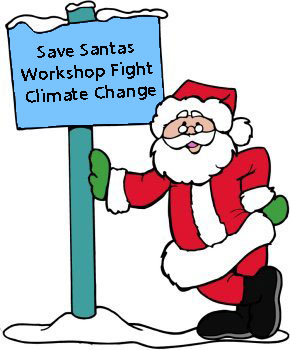 Nowadays, The traditional western Santa Claus is considered to be an Arctic resident. While his exact location is not known, there are some strong beliefs that his whereabouts are at the North Pole where he has his toy factory. However scientists have not yet discovered the Santa Clause home even though that various observations have been taken place in the Arctic, close to the North Pole and on the Pole itself. Dispite that fact, Santa Claus still appears every year and brings joy to thousands of peoples all across the world.
Due to that fact alone, people should be aware of the changing climate and global warming, for the Santa´s workshop might be at risk.
The Arctic Portal staff wishes all it´s readers and users Merry Christmas and a Happy New Year!
Arctic Portal.org needs your support to continue its successful journey! - Help us make Arctic Portal.org even better!
- Details
- Written by: ofurpaur
- Category: YAR & Features
- Hits: 13067
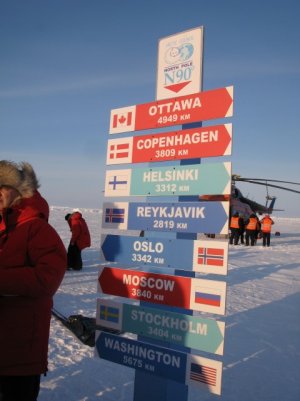 "Where does the wind blow from when you stand at the North Pole? From the South!"
Our expedition to the Arctic now has first-hand experience of this since the beginning of April. In the early morning hours, reckoned by our Finnish watches, the sun shone in a clear sky and it was almost 30 degrees below zero.
The flat, bright ice field around us was immense. Our biggest surprise was the thickness of the sea ice. Almost all of us presumed that the long-term ice would be very thick, but drilling showed that at 1.2 meters it was no thicker than the ice on which people typically go ice fishing. Although the sea ice is level on the surface, it is far from being equally thick everywhere.
Moreover, the open leads that we also discovered on our trip were evidence of the progress of climate change. Forecasts of the year when this polar area will be completely free of ice for part of the year vary from 2030 to 2050. The earlier estimate may be closer to the truth, but predicting changes in the Arctic has already proved problematic.
Our trip to the North Pole was the third expedition arranged by the Russian Security Council. In summer 2011 we took the Northern Sea Route from Nenetsia to Yakutia on a nuclear icebreaker, and in spring 2012 we visited Franz Josef Land.
Invited participants have all been members of the Senior Arctic Officials committee of the Arctic Council. The composition of delegations has otherwise varied according to the themes discussed.
Our most recent trip took us from Moscow to Salekhard, the capital of the Yamal Peninsula, where we boarded Antonov-72 aircraft to reach the Nagurskoye frontier guard station on Franz Josef Land and change into polar gear. This was followed by another air transfer to the Barneo Research Camp on the polar ice, from which we covered the remaining hundred kilometers to the North Pole by MI-8 helicopter.
The revised Arctic strategy of Russia assigns pivotal status to Arctic areas. The population of the region is low. North of the 60th parallel it is about the same as that of Finland (5.3 million), but the Russian Arctic provides 91 per cent of the country's natural gas and 43 per cent of its oil production. Considering the findings of the Russian Academy of Sciences that the national wealth of Russia is based on energy and mineral resources (about 88 per cent) and on forests (about 9 per cent), it is easy to grasp the strategic meaning of Northern Russia.
Russian oil and gas production is nowadays largely concentrated on the Yamal Peninsula. This is the location of Gazprom's modern Bovanenkovo gas field, which also supplies natural gas to Finland and the Baltic countries. There is a general look of affluence in Salekhard, the regional capital of the area: everything is new, big and clean in this city of almost 100,000 inhabitants.
President Vladimir Putin is arranging an Arctic forum in Salekhard this autumn, and has invited President Sauli Niinistö of Finland and other Heads of State to attend discussions focusing on environmental issues. Already at his first Arctic forum in Moscow 2010 Putin delivered a strong speech on what needs to be done to solve the environmental problems of his country. During our Polar expedition we heard that measures have especially been taken to remove hazardous waste from Franz Josef Land and Novaya Zemlya.
 Russia's Arctic energy production has so far been land-based, though it has been announced that the Prirazlomnaya offshore oil platform will soon come on stream. The Yamal Peninsula is home to indigenous populations such as the Nenets, for whom reindeer herding is an important livelihood.
The Arctic Centre of the University of Lapland has been engaged for several years in research co-operation on the peninsula, seeking to promote the compatibility of energy production and traditional Nenets livelihoods (this includes planning pipelines to avoid disrupting reindeer migration routes). Indeed, Governor Kobylkin from the Yamal autonomous district addressed us warmly and at length about the indigenous peoples and how the position of their representative body, the RAIPON association, was threatened last winter. We also learned that this problem has now been resolved.
The Northern Sea Route is opening up, and so are the policies of Russia. Forecasts of how soon the ice on the passage will melt have regularly been surpassed in recent years, and the route will indeed soon become a cost-effective alternative. Last year some 1.2 million tons of goods were transported on 46 ships using the Northern Sea Route, with early figures suggesting a manifold increase in volume in the navigation period that began in June.
This traffic has so far been conducted on a trial basis, and has chiefly comprised shipments of oil, gas and extracted minerals. The approach has been more cautious for goods freighters on stricter schedules. This is nevertheless about to change as, for example, the major Danish container shipping company Maersk has announced that one fifth of its Suez traffic will move to the Northern Sea Route in future. This also poses a challenge for Russia, which is not yet fully prepared to meet the increasing demand. The country's icebreaker fleet is beginning to be outdated, and there is an urgent need for new icebreakers and other vessels that are fit for icy conditions.
The infrastructure as a whole requires considerable investment (harbours, charting of routes, navigation equipment, forecasts and observations of weather and ice conditions, satellite and other telecommunication links). At the same time the regulations, control systems and tariffs governing traffic on the route must be clearly specified.
The various needs associated with the Northern Sea Route are well known in Russia. Putin's new strategy tackles these needs, and new legislation has been adopted, including the founding of an administrative centre for the Northern Sea Route in Moscow. However, Russia will not be able to meet all of these challenges alone – at least not within the constantly changing schedule. This provides major opportunities for Finnish Arctic expertise. The Arctic partnership launched a few years ago between Finland and Russia provides enterprises and institutions with a flexible framework for concrete co-operation, and indeed the Northern Sea Route was the principal focus of the last partnership meeting held in Oulu. This discussion was continued in June at a partnership seminar in Archangel.
Russia had invited representatives from the eight member states of the Arctic Council (the Nordic countries, Canada, the USA and Russia) to participate in the expedition to the North Pole. A greeting from President Putin to the Salekhard conference affirmed that the expedition also sought to consolidate co-operation between the member states of the Council.
All of the governments of the member states and the representatives of indigenous peoples are agreed on the desirability of consolidating the Council, and Finland has also joined with Russia in proposing that the Council be acknowledged as a sovereign international organization. However, there is no agreement on the role of external stakeholders. Finland's position reflects the view that Arcticness is a regional issue that nevertheless has significant global dimensions (climate change, transport routes, fisheries, etc.). We regard the granting of observer status to countries and organizations that fulfill the council's criteria and show a well-grounded interest in the region as an essential aspect of strengthening the Council, and we consider it especially important to grant observer status to the European Commission. This is a subject on which the Arctic Council's meeting in Kiruna achieved a good solution.
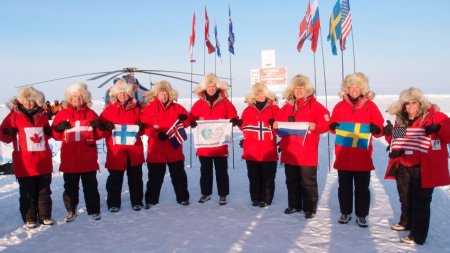
Our expedition was accompanied by President Putin's special representative Artur Chilingarov, who bears the title of Hero of the Soviet Union and Hero of Russia and is a member of the Federal Council. Chilingarov is internationally renowned especially for his 2007 dive in a Finnish-made MIR-1 submersible to plant a Russian flag on the Arctic Ocean seabed near the North Pole. And indeed before even setting out we also agreed the details governing use of the flags of the Arctic Council and its member states regarding such aspects as size, order and display. For a few sunny hours after midnight the Arctic Council flew its flag to celebrate its "conquest" of the North Pole – before the southerly wind swept away all traces of our visit.
Hannu Halinen
Arctic Ambassador
Finnish representative on the Senior Arctic Officials committee
- Details
- Written by: ofurpaur
- Category: YAR & Features
- Hits: 15011

The increase in human activity in the Arctic region, which is driven by the ever increasing demand for decreasing stocks of natural resources (mineral as well as hydrocarbons), has led to a rise in the need for improved management, monitoring and surveillance of the region.
The weather conditions may change quickly and dangerously, while the presence of the sea ice poses a risk to ships. For those reasons, the need for frequently updated information has increased.
Arctic Frontiers has been yearly organized as an independent network and leading meeting place for pan Arctic issues. This year's Arctic Frontiers took place 20th – 25th January in Tromso, located in the northern part of Norway.
This year's event collected close to 150 speakers from variety of countries. The audience accounted close to 2 000 people from various Arctic states and different fields of expertise. Both groups were largely supported by 35 journalists from 15 different countries. This number does not include the many local Norwegian media.
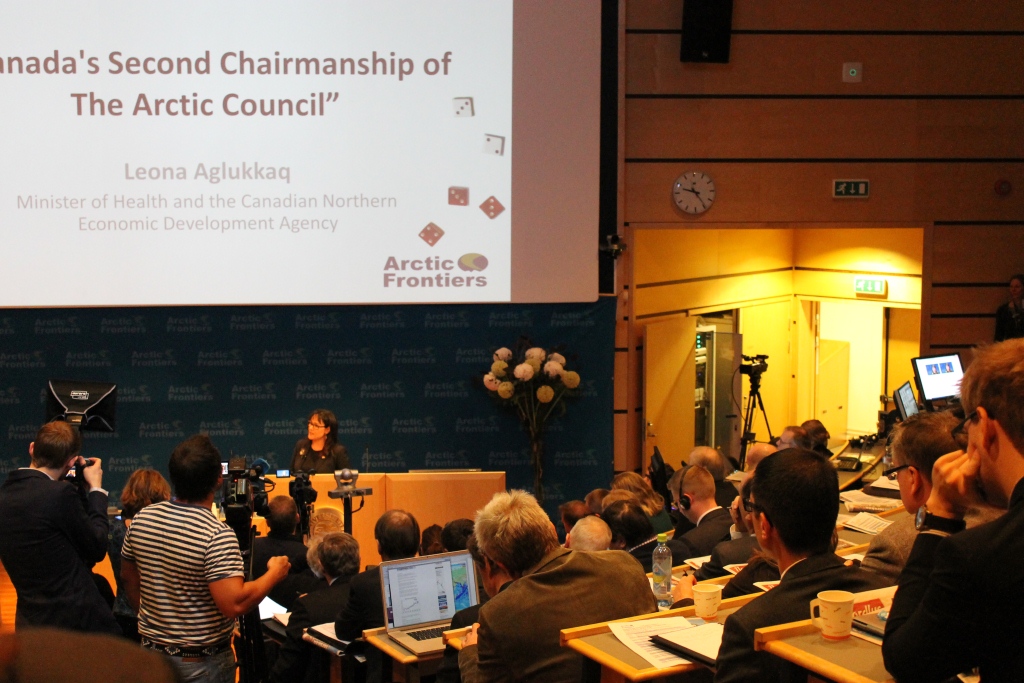 First two days were occupied by the policy section titled: Geopolitics and Marine Production in a changing Arctic''. This year's policy session gathered speakers from the eight Arctic countries bringing up issues from charring and managing the Arctic Council, fisheries, oil and gas exploitation and the right and responsibility of the Arctic peoples to manage their territories to the role of armed forces in the Arctic.
Non-Arctic states were also well represented. The policy session welcomed speeches from the Ambassadors of China and South-Korea as well as from the EU Commissioner for Marine Affairs and Fisheries , while the science section's geopolitics session expanded the Asian representation to cover diverse range of issues regarding Japans, South-Koreas, Singapore and India's interests in the Arctic.
Non – Arctic states, together with the representatives of the Arctic, came up with new principles of how to manage, explore and develop the Arctic in the light of an on – coming change.
Today the Arctic Region is an emerging energy and mineral province, with the extraction of natural resources projected to increase dramatically in the coming years to decades. New industrial activities, a changing business community and demographic dynamics are to alter the established social and economic structures in several regions of the Arctic.
In short it can be said, that the non-Arctic countries call for an open and inclusive trans-regional dialogue and resource management and inclusive observer policies for the Arctic Council. In their view, the Arctic is not isolated region within the global economic and resource community, but a part of a global system that should be governed by and benefit all countries in the world.
It occurred evident that the interest towards the Arctic is growing and southern countries have started to grow increasing interest on the emerging opportunities in the Arctic.
In addition to the two day policy section, the Frontiers had a comprehensive science section concentrating this year on the above mentioned geopolitics, marine harvest and marine production.
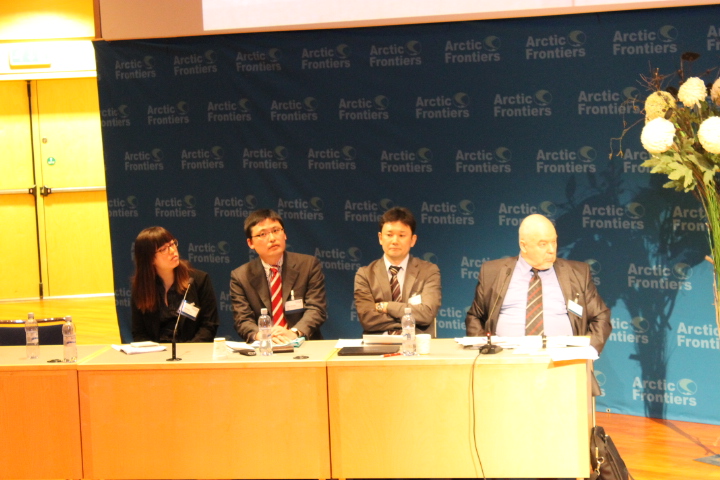 The science section addressed mainly the issues of security, energy and interstate relations in the Arctic. Overall, it identified conditions of continued stability in light of new developments in the northern hemisphere.
A warming Arctic Region with less ice may involve opportunities in terms of economic activity and increased interstate cooperation, but may also present the Arctic stakeholders with new challenges in terms of how best to meet their interests and at the same time interact with the other stakeholders through mutually beneficiary relations.
The Arctic potential to become a new, thriving energy region was strongly highlighted during first days of the policy session.
The circumpolar North holds large quantities of natural gas and oil, both discovered resources and estimated ones. Northern Russia has the largest known reserves of natural gas in the Arctic, but it can also be found in other regions such as Norway, Canada and Alaska.
Last day of the science session welcomed representatives of non – Arctic states, such as Asian and European states that do not border the region. Those countries and organizations have been increasingly opening their eyes into the changing North. The speakers tried to answer the questions of does their interest consist of and what is their policy towards the Arctic Region.
The Arctic region has many faces. Historically it has been veiled by an aura of mystique, a frozen wonderland untouched both by the outside and the effects of industrialization, populated by a mysterious group of people from a different phase in the history of man. As interesting and romantic this notion may seem, it holds little or no truth in the Arctic today.
 The Arctic is literally on top of the world, the earth rotating around the two poles, in the North and the South. But the Arctic is not just about the North Pole - the Arctic region stretches much further in all directions, even splitting the earth into the East and the West, famous identities in the world history.
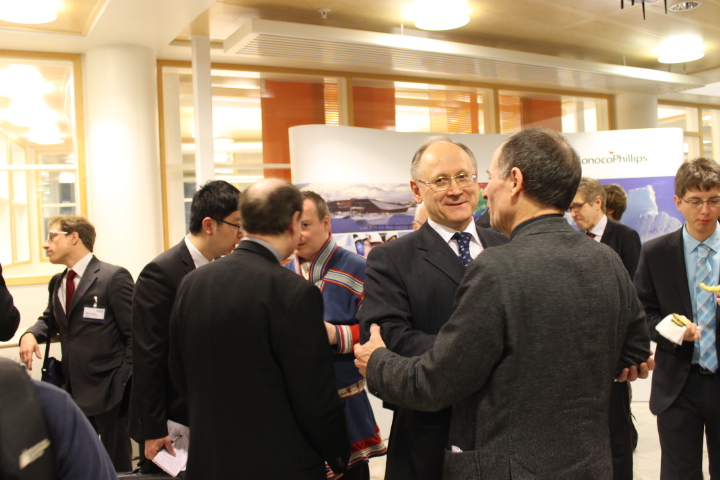
This year's Arctic Frontiers highlighted that the Arctic is not only a historical and cultural region but also a potential for commercial and industrial activities. The meeting showed that the Arctic should be looked at as at the mixture of traditional subsistence activities as well as a part of the global market economy.
Leena & HMM
- Details
- Written by: ofurpaur
- Category: YAR & Features
- Hits: 13356
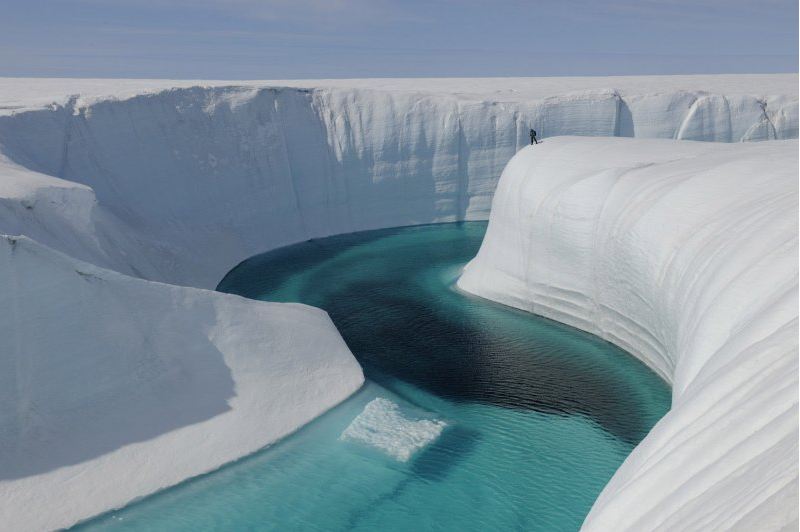 Chasing Ice, a film by Jeff Orlowski, was premiered on December 14th. The movie follows photographer James Balog through his journey in the Arctic and his Extreme Ice Survey.
Once a skeptic about Climate Change, Balog went on a mission to record climate change first hand. By deploying revolutionary time-lapse cameras to capture a multi-year record of the world's changing glaciers, he managed to put together amazing videos of climates effect in the Arctic.
Orlowski followed Balog around the world and the result is the film, which has been shown on film festivals since this fall.
The films website states: "Traveling with a team of young adventurers across the brutal Arctic, Balog risks his career and his well-being in pursuit of the biggest story facing humanity. As the debate polarizes America, and the intensity of natural disasters ramps up globally, Chasing Ice depicts a heroic photojournalist on a mission to deliver fragile hope to our carbon-powered planet."
Filming took place in various locations, not only in the Arctic. They include Greenland, Iceland, Alaska, Glacier National Park in Montana, the Alps, Bolivia and Canada.
Speaking in a Q&A, director Orlowski described the biggest challenges of the shooting. "The biggest challenge was the harsh environments. We had weather as low as negative 30 degrees. One winter night in Greenland, I thought I was going to freeze to death in our cabin. Our heater was leaking gas so we decided to go to sleep without it. I woke up in the middle of the night from my own teeth chattering. I rubbed my body to stay warm, and suffered until sunrise. But as cold as it was, and as difficult as it may seem, that was all the fun stuff. I'd do it all again in a heartbeat. I'd much rather be out shooting than editing!"
Sources
Chasing Ice
See also: