
- Details
- Written by: ofurpaur
- Category: YAR & Features
- Hits: 7016
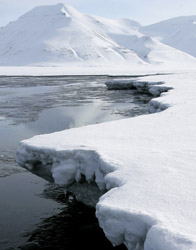 Now that the holiday season is approaching most of us wish it would snow, at least a little. White Christmas is at the top of the list for most kids and even we adults would not mind sliding a sledge down some nice hill every once in a while. For Arctic indigenous peoples snow is almost an all year round experience and throughout the centuries snow has played an important role in their way of life. However, for Arctic residents snow is not just snow. In most Arctic indigenous languages can be found various expressions for different types of snow and for example in Icelandic there can be found at least 10 different words for snow of which many are also popular names, such as Fönn, Fannar, Mjöll and Snær.
The Icelandic repertoire is though nothing compared to the Inuktitut one, which has more than 200 different words for snow depending on the type of snow as well as the surrounding conditions. Qanniq means falling snow, maujaq deep, soft snow, kinirtaq wet, compact snow, katakartanaq crusty snow marked by footprints, uangniut snowdrift made by northwest wind and munnguqtuq compressed snow softening in spring.
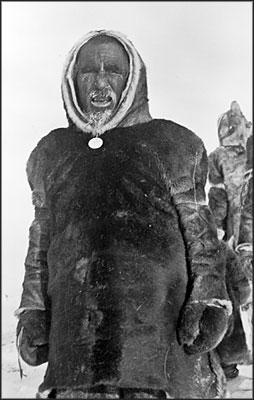 The Saami languages also categorize snow according to texture and context. For example, words used in connection with skiing and reindeer husbandry are different, even though the snow would be the same. It is also interesting to notice that even though Saami and Finnish are related languages and many of the words for snow in Saami sound familiar to Finnish speakers, the Finnish language itself only has three different official words for snow. The Saami word vahtsa means one or two inches of new snow on top of old snow. New wet snow is called slahtte and falling rain mixed snow slabttse. Falling wet snow lying on the ground is called släbtsádahka or släbsát. Skilltje, bulltje and tjilvve are words for snow and ice that fall on objects, reindeer moss and trees. Large lumps of snow hanging on the ridge are nearly always called bulltje. Åppås on the other hand is virgin, clear snow.
- Details
- Written by: ofurpaur
- Category: YAR & Features
- Hits: 7154
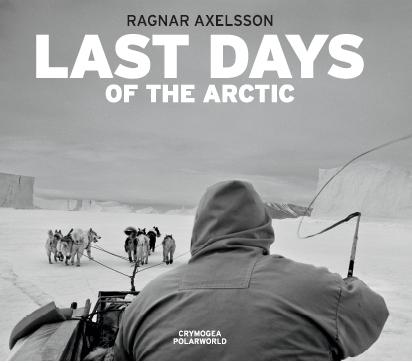 "The world turns its gaze toward the Arctic. Nowhere are the signs of climate change more visible; here global warming already affects the day-to-day lives of the local people. Still the circumpolar Arctic is one of the most disputed territories on Earth, with many nations laying claim to the mining and oil rights of the area as the sea ice retreats. For thousands of years the Inuit have built their communities based upon a sensitive understanding of the land and the frozen ocean, but rapid social and environmental change threatens their traditional way of life. The hunters of the North are a dying breed. This is the twilight of their society." (rax.is)
[http://www.youtube.com/watch?v=u3yxDnaben4]
Ragnar Axelsson is an Icelandic photographer and photojournalist, born in 1958. He has worked for the Icelandic newspaper Morgunblaðið since 1976 and as a freelance shooting projects in various parts of the world for numerous magazines and agencies. The North has for a long time fascinated him and different aspects of north appeared in his photography regularly. In 2004, he published "Faces of the north", a collection of his black and white photographs of traditional ways of life in Iceland, the Faroes and Greenland taken over a period of fifteen years, preserving that way a glimpse of a lifestyle that is gradually vanishing.
His newest publication "Last days of the Arctic" is a breathtaking introduction to a life of Greenlandic hunters in the most remote communities in the world. Professor Mark Nuttall, one of the leading Arctic scholars, wrote the foreword for the book, which in sincere and simple way represents the part of world that we now watch changing.
To learn more about Ragnar Axelsson, please visit his homepage.
Here below you can see a documentary of him made by his son Jón Snær Ragnarsson. The film is in Icelandic only.
[http://www.youtube.com/watch?v=PPdnjLSvG1Q]
- Details
- Written by: ofurpaur
- Category: YAR & Features
- Hits: 7148
 Michel Rocard, a former Prime Minister and now a special representative for the President of France with regards to matters concerning the poles, Arctic and Antarctic, gave a lecture "Towards an Arctic Governance: What role for France and Europe?" at the University of Iceland on November 1, 2010. The lecture is part of a series organized by the President of Iceland, entitled "New Currents" in which various internationally known scholars and world leaders have taken part over the years.
Michel Rocard has a long political career behind him. He has served as a Minister of Agriculture in France and was the Prime Minister of France between 1988-1991. He held a seat in the European Parliament for three terms and has been especially active in matters concerning foreign policy, education and employment. In this lecture he will share his vision for the North and discuss the role of Europe in the future of the Arctic region.
Michel Rocard from Kennslumiðstöð Háskóla Ísl on Vimeo.
- Details
- Written by: ofurpaur
- Category: YAR & Features
- Hits: 11308
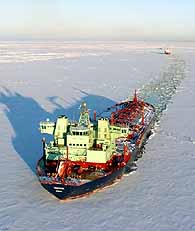
Over the past decade or so the world has become to realise the great importance of the Arctic region to the global ecology.
- Details
- Written by: ofurpaur
- Category: YAR & Features
- Hits: 5967
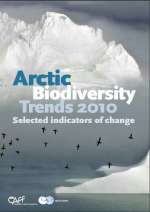 CAFF - The Arctic Biodiversity Trends 2010 Report, produced by some of the world's leading experts of Arctic ecosystems and biodiversity, is the Arctic Council's contribution to the United Nations International Year of Biodiversity in 2010 and will be a preliminary product under the Arctic Council project 'Arctic Biodiversity Assessment' (ABA).
In 2008, the United Nations Environment Program passed a resolution expressing 'extreme concern' over the impacts of climate change on Arctic indigenous peoples, other communities, and biodiversity. It highlighted the potentially significant consequences of changes in the Arctic. The Arctic Biodiversity Trends – 2010: Selected Indicators of Change report indicates that some of those anticipated impacts on Arctic biodiversity are already occurring.
The report is based on twenty-two indicators and provides a snapshot of the trends being observed in Arctic biodiversity today. The polar bear is one of the most well-known species impacted by changes in the Arctic, but it is not the only one. The indicators show that the Arctic has changed dramatically during recent decades and that unique Arctic habitats for flora and fauna are disappearing. Furthermore, some species of importance to Arctic people or species of global attention are declining.
The report presents 7 key findings;
- Unique Arctic habitats for flora and fauna, including sea ice, tundra, thermokarst ponds and lakes, and permafrost peatlands have been disappearing over recent decades.
- Although the majority of Arctic species are not currently declining, some harvested species of importance to Arctic people or species of global significance are declining.
- Climate change is emerging as the most far reaching and significant stressor on Arctic biodiversity. However, contaminants, habitat fragmentation, industrial development, and unsustainable harvest levels continue to have impacts. Complex interactions between climate change and other factors have the potential to magnify impacts on biodiversity.
- Since 1991, the extent of protected areas in the Arctic has increased, although marine areas remain poorly represented.
- Changes in Arctic biodiversity are creating both challenges and opportunities for Arctic peoples.
- Long-term observations based on the best available traditional and scientific knowledge are required to identify changes in biodiversity, assess the implications of observed changes, and develop adaptation strategies.
- Changes in Arctic biodiversity have global repercussions.
To download the report and to learn more about the Arctic biodiversity please go to the Conservation of Arctic Flora and Fauna (CAFF) Working Group under the Arctic Council homepage or Arctic Biodiversity Trends 2010 reports homepage