
- Details
- Written by: ofurpaur
- Category: YAR & Features
- Hits: 20790
Driving a car is the most polluting act an average citizen commits and cars are the single most contributors to air pollution in the world. Partial shift to other energy sources could reduce CO2 emissions significantly.

Electric cars are not a new invention and have been around for years. The Smart car for example is known to most dwellers of urban centers and metropolies around Europe and the United States, and could be described as a funny little car that has limited usability to the average individual. Fuel cells or batteries have been the limiting factor in electric cars in the past. The duration of the batteries was low, they were heavy and not environmentally friendly in production. Over the last couple of years technical advancement have been significant, and further advancements are to be expected. As a indicator of the weight being put into further development U.S president Barack Obama recently allocated a billion $ to further development of batteries and supporting technologies to be used in such vehicles.
Electric cars are becoming more and more competitive for various reasons. Environmental awareness has over the past decades been on the rise and governments are allocating more funding for research and development. Fluctuations in energy prizes, the notion of energy security and the possible future scarcity of fossil fuels further encourage development of new methods and facilitate the establishment of infrastructure needed for such vessels.
In Iceland work has begun by a company called 2012 on the establishment of 10.000 charging stations and 150 speed-charging stations located around the country. The idea is that one could charge one's car while shopping for groceries, going to the cinema, etc. An average car could be fully loaded in 3-4 hours in a regular charging station and in 10-15 minutes in a speed-charging station. The electric cars of today are able to manage between 100 km per charge to 470 km approximately.
Admission to the charging system would be managed by subscription and the estimated cost would be between 5-10.000 Icelandic Kr per month. For comparison 50 liters/ 13 gallons of gasoline cost 8900 Kr in Iceland today. Electricity would thus be significantly cheaper than buying gasoline for the average user per month, given that this estimate is accurate. Users that drive more than average would be billed accordingly and users that drive less would be refunded credits to their energy account. Users that charge their cars at home and do not use their cars often would therefore be able to save significantly. Furthermore maintenance is expected to be less expansive since an average diesel engine has approximately 1000 moving parts while a similar electric motor has four. Despite for lower operating costs electric cars are as of yet significantly more expensive than their fossil-fuel counterparts but this can be expected to change as production of them increases.
A wide range of cars are and have been developed using electricity as there only energy source.
Electric motocross/dirt bikes have become a reality as well as the production of electric Skidoo’s/Snowmobiles can be expected to commence in a couple of years.
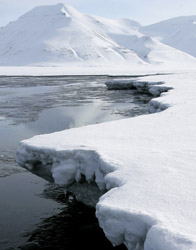
Cars using alternative energy sources than fossil fuels are definitely on the rise and could be so especially in the Arctic. A common nominator to many areas of the Arctic is the abundance of hydro energy. Furthermore work is being done on creating electricity with wave or tidal power, solar power as well as by the use of windmills. Technological advancements over the past decades and the foreseeable future will enable us to create more electricity at a declining cost which are more environmentally friendly than previous methods.
The Arctic regions are especially vulnerable to air pollution. Toxins from thousands of miles away can enter the Arctic ecosystems, creating health risks to local people, especially to the Inuit due to their traditional diet. Despite the marginal part of the Arctic’s pollution, originating from the Arctic it is highly important that the Arctic countries lead the way in finding more sustainable solutions.
- Details
- Written by: ofurpaur
- Category: YAR & Features
- Hits: 10500
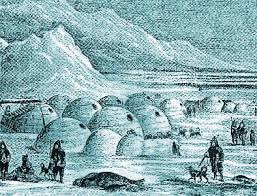
Through the times, the island today called Greenland has hosted many different peoples over varying periods. It has been estimated that first peoples came to the remote North-Atlantic island around 2500 BC and that the ancestors of the contemporary Inuit populations came from Alaska, Siberia and Canada, the Arctic thus having one Inuit population over a vast area of northern hemisphere.
Read more: From remote island to Self-Government - Greenland’s journey towards independence
- Details
- Written by: ofurpaur
- Category: YAR & Features
- Hits: 6307
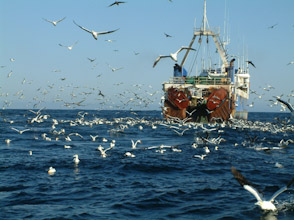
Fishing within the North East Atlantic has been a significant economic resource as well as a practice that has become rooted in the culture of fishing nations utilizing the resource. In the Icelandic sagas, the fish was considered to be a gift from the gods and free for all who sought it (Jón Þ. Þór, 2006). This has however changed in Iceland as well as the world in whole.
Read more: The dire situation of the world’s fisheries in the Arctic and beyond
- Details
- Written by: ofurpaur
- Category: YAR & Features
- Hits: 6483
 The left- wing party Inuit Ataqatigiit (Community of the people, IA) has won the Greenlands parliamentary elections with the support of 43.7% of voters. The ruling party for the last 30 years, the Social Democratic party (Siumut), received 26.5 % of the total vote. The democratic party(demokraatit) received 12.7% of the popular vote and the feeling of community(Atassut) came in fourth with 10.9%
IA will hold 14 of 31 seats within the newly elected parliament and will still need the support within some of the smaller parties to form a coalition government and receive majority support within the parliament.
IA leader Kuupik Kleist told supporters that "Greenland deserved this, we can lead this country forward, into a new era" in a celebration ceremony in Nuuk when the outcome of the election became apparent
Political observers in Greenland believe that this shift can traced to a series of financial scandals involving leading members of the governing Social Democratic Siumut Party. The outcomes of the elections can be said to reveal that the people of Greenland say "no" to these practices and have lost faith in the Siumut party to lead the nation forward in these interesting times. Following the outcome of the elections out-going premier Hans Enoksen, party leader for the past eight years, has resigned as the leader of Siumut and will be replaced by Alega Hammond.
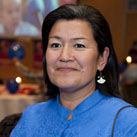 IA will be the first party to govern in Greenland under the newly expanded home-rule agreement, which was approved by popular vote in November 2008. The newly approved home-rule agreement will give the Greenlandic government increased control over their natural resources and allow it to take greater charge of justice and legal affairs and will make the political development of Greenland all the more interesting.
11.06 News update: Agreement reached for new coalition agreement.
The new IA coalition partners are Demokraatit and KP, giving the IA coalition a majority of 19 seats in parliament, against the 12 opposition members made up of Siumut and Atassut MPs.
- Details
- Written by: ofurpaur
- Category: YAR & Features
- Hits: 10561
CAFF - Flora group
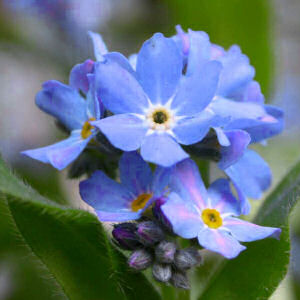 Traditionally, conservation and research activities for arctic plants have not been well coordinated in terms of common direction, concerns, reporting, and information exchange. Governmental and non-governmental groups have been organized bilaterally. Therefore, plant conservation and research activities have not had a fully circumpolar perspective.
During the next few decades the Arctic will be strongly affected by forces within and from outside the region, including the impacts of global climate change, resource development, changes in numbers of wildlife species, increases in permanent residents, and burgeoning tourism.
The relatively simple and often fragile arctic ecosystems are dramatically altered through changes to the species composition of the vegetation, destruction of wetlands, and thawing of ice-rich permafrost, as well as through feedbacks of these effects to global hydrologic and atmospheric systems. To preserve plant diversity, conservation programs must be guided by the biological requirements of species and ecosystem components as biological diversity ensures a healthy biosphere.
Traditionally, conservation and research activities for arctic plants have not been well coordinated in terms of common direction, concerns, reporting, and information exchange. Except for two CAFF action items, Panarctic Flora Project (PAF) and Circumpolar Arctic Vegetation Mapping Project (CAVM), governmental and non-governmental groups are often organized bilaterally. Therefore, plant conservation and research activities have not had a fully circumpolar perspective.
Arctic Lichen Data Map
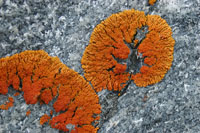 With the creation of the CAFF Flora Group (CFG) within the Conservation of Arctic Flora and Fauna (CAFF) of the Arctic Council, it is ensured that scientists, conservationists, and managers interested in arctic flora and vegetation have a forum to promote, facilitate, and coordinate conservation, management, and research activities of mutual concern. Conservation of rare and endemic arctic plants is one of the roles of Caff Flora Group. Adequate knowledge of all plants present in the Arctic and their distribution within the Arctic is a prerequisite for satisfactory preservation of arctic diversity.
As part of this task, a list of all lichens (1610) and lichenicolous fungi (250) recorded in the Arctic is presented in the Arctic Lichen Distribution Map on the Arctic Portal. For this purpose the Arctic has been divided into 28 regions with separate lists for every region. The highest lichen diversity is found in West Greenland, 851 species. Well investigated arctic regions of considerable size generally contain about 5-600 species of lichens. 133 species of lichens appear endemic to the Arctic according to present knowledge. That means they are not found anywhere outside the Arctic. 15 species of lichens have been recorded in all of the 28 arctic regions.
To view the Arctic Lichen Distribution Map, please click here.